



Dramaturgical Artist Leo Liangda Hu on Intercultural Theatre Practice in New York
In November 2025, Mr. Ma’s in New York was presented as a ticketed staged reading at 280 Broadway (Gibney Studio), an established New York venue regularly utilized for experimental theatre and developmental productions within the city’s professional theatre ecosystem. The presentation was produced by Dreamborne, a registered New York production company, and mounted within a professional rehearsal and performance framework, with formal production documentation including playbills and performance photography.
As the playwright and dramaturge of the work, Leo Liangda Hu maintained a central creative role throughout the development process. Beyond authorship, he participated actively in rehearsal refinement, contributing to script revisions and performance detail in collaboration with actors and the production team.
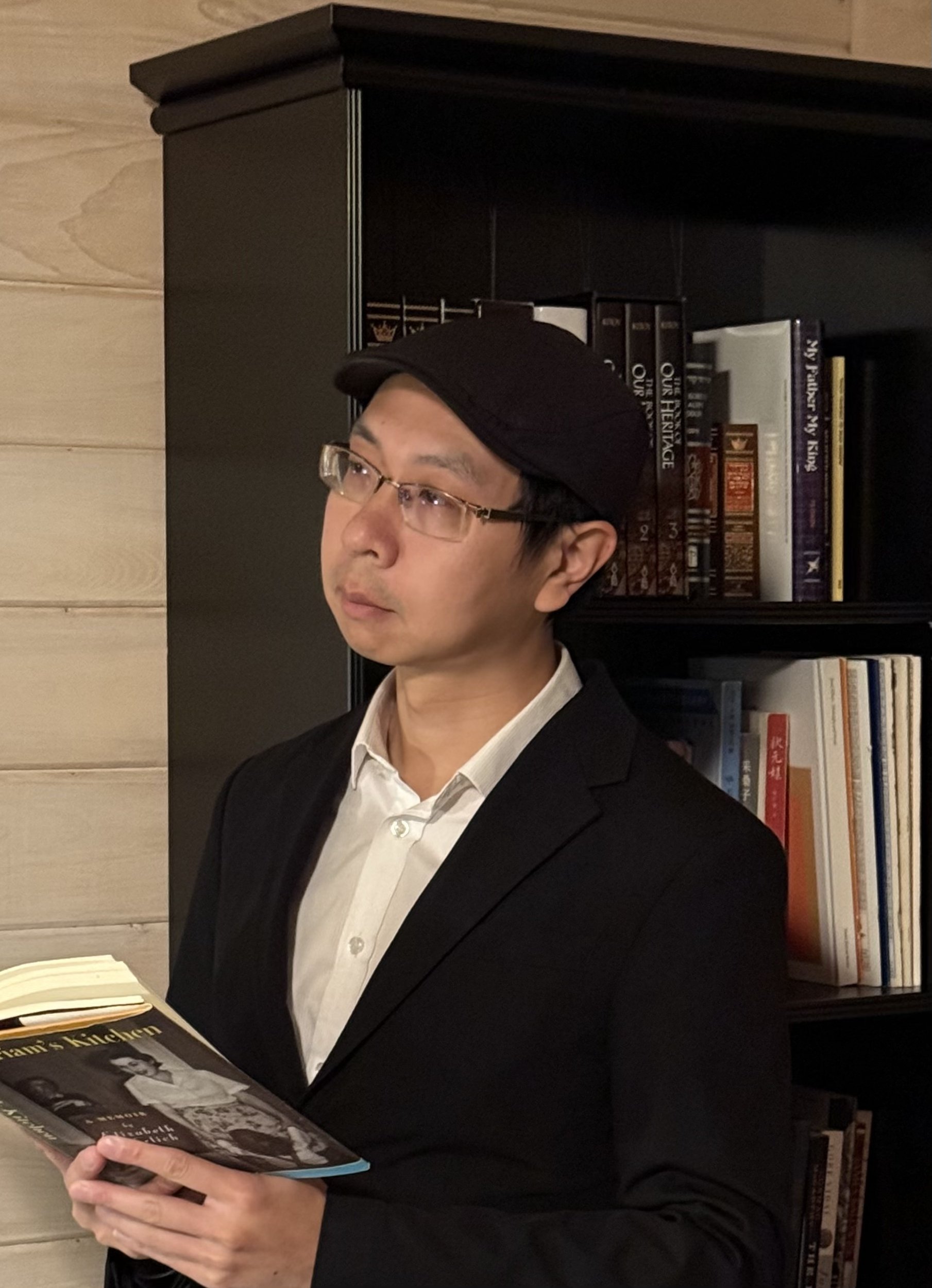
Originally written in 2025, Mr. Ma’s in New York is a bilingual dramatic adaptation inspired by Lao She’s early twentieth-century novel Mr. Ma and His Son. Rather than reproducing the source material, Hu undertook a substantial structural reimagining of the narrative, relocating the story from 1920s London to 1990s New York and reframing the central intercultural encounter. The original dynamic between a Chinese and English Christian household was reconstructed into an interaction between a Chinese immigrant family and a Jewish family in New York, allowing the work to engage contemporary questions of migration, identity formation, and cultural negotiation.
The adaptation extends beyond geographic relocation. Hu reconfigured character trajectories, restructured dramatic pacing, and developed a multilingual textual environment integrating Mandarin and English dialogue with embedded Yiddish expressions, Hebrew terminology, and references to Jewish ritual practice. These linguistic and cultural layers serve not merely as background detail but as dramaturgical mechanisms through which the play examines the immigrant experience and the complexities of cultural and religious interactions. By foregrounding cultural specificity—particularly in everyday speech, ritual nuance, and interpersonal misunderstanding—the work positions micro-cultural detail as central to the construction of belonging.
As dramaturg, he worked closely with performers to ensure linguistic and cultural precision. This included refining Mandarin dialect distinctions so that the central character’s speech reflected a Beijing identity, and facilitating conversations regarding the integration of Yiddish and Hebrew elements within performance. He also participated in casting discussions and broader creative decisions related to the presentation and public framing of the work. While collaborative in structure, the development process relied significantly on Hu's textual and cultural expertise in shaping the play’s intercultural framework and translating culturally specific material into a coherent theatrical experience for a diverse audience.
Hu’s contribution reflects an established dramaturgical method rather than a one-time creative role. His practice combines rigorous text revision, culturally grounded research, language calibration (including dialect and code-switching), and rehearsal-based refinement, with careful attention to how context is communicated to audiences. This repeatable approach supports community-facing intercultural theatre projects that can foster constructive dialogue across immigrant and religious communities, an outcome aligned with the broader public interest in strengthening mutual understanding and social cohesion in a culturally diverse society.
The staged reading represents an early phase in the work’s continued development. The script is currently undergoing revision, with a ticketed full production planned with support from the American Young Artists Association (AYA), a registered non-profit organization supporting artists across music, theatre, and film. Hu currently serves as Dramaturgical and Artistic Project Development Manager at AYA, where he contributes to script development, interdisciplinary collaboration, and production planning. This work situates his dramaturgical practice within nonprofit-supported cultural programming and expands the potential for broader community engagement.
Hu’s work in New York builds upon nearly a decade of sustained professional theatre practice in China. From 2011 through 2019, while pursuing his university studies, he maintained long-term, active involvement with the Beiyang Drama Club at Tianjin University, contributing to student productions in directing and rehearsal leadership capacities and supporting performer training. During this period, he directed approximately one major production annually, leading script interpretation, rehearsal development, and performer training.
Several productions extended beyond the university setting into public theatre venues. Rose’s Monologue and Twilight were staged at The Black Box Theatre at Tianjin Civil Culture Center, and Rose’s Monologue was invited to participate in the Beijing, Tianjin and Hebei Drama Festival for University Students. Hu also directed a production of Beijinger by Cao Yu, a widely recognized twentieth-century Chinese playwright, which received media coverage. These ensemble-based productions typically involved casts and crews of approximately twenty to thirty participants, requiring sustained artistic coordination and leadership.
This long-term directing experience now functions as a foundation for Hu’s dramaturgical leadership. Years of rehearsal-room practice strengthened his ability to diagnose narrative structure, refine character and pacing, and collaborate with performers to translate text into performance. Between 2014 and 2017, he completed a Master’s degree in Performance Studies at the Central Academy of Drama while continuing his directing practice. The integration of graduate-level performance theory with ongoing public productions established a hybrid methodology bridging pedagogy and stage realization.
Hu’s relocation to New York was initially motivated by artistic development in vocal performance. After concluding his directing work in China, he pursued formal conservatory training in the United States, studying classical voice at the Manhattan School of Music from 2021 to 2022, followed by advanced training in musical theatre performance at New York University’s Steinhardt School from 2022 to 2024. His decision was informed in part by earlier experience translating and directing Company, during which he recognized the importance of rigorous vocal preparation within musical theatre contexts.
Sustained residence in New York exposed Hu to complex intercultural dynamics distinct from his earlier professional environment. Engagement with Jewish cultural traditions and community life deepened his reflection on migration, identity, and belonging. These experiences sharpened his sensitivity to linguistic nuance and ritual specificity—concerns that now inform his dramaturgical approach and strengthen his capacity to develop culturally precise work that resonates with diverse American audiences. Through projects such as Mr. Ma’s in New York, Hu’s evolving body of work situates Chinese cultural narratives within contemporary American theatre contexts, with particular attention to the intercultural dialogue between Chinese and Jewish traditions in New York. His dramaturgical approach emphasizes linguistic nuance, ritual specificity, and the tensions inherent in processes of migration and cultural integration. By bringing culturally precise, bilingual storytelling into professional development settings, Hu advances a community-facing intercultural theatre practice that deepens public understanding across communities and supports constructive cultural dialogue.